Will Claude Design Replace UI/UX Designers in 2026?

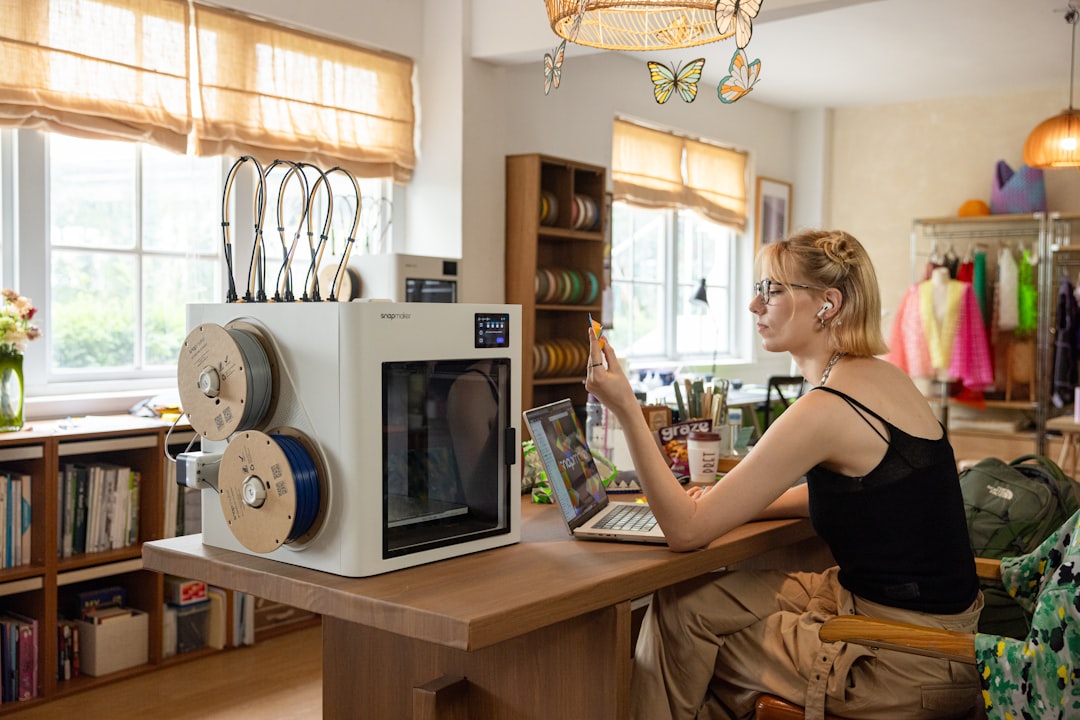
My wife is a graphic designer. When Claude Design launched, I watched Figma stock drop 4.26% in a single day. She asked me if she should be worried about her job.
I told her the honest truth: she’s safe for now, but she needs to adapt how she works.
After spending a week testing Claude Design myself and reading what actual professional designers think, I found the pattern that keeps repeating with AI tools. The headline says “AI will replace designers” but the reality says “AI will change design work.”
The Panic and the Reality
The market reaction was immediate and dramatic. Investors saw Claude Design generating functional UI mockups from text descriptions and assumed the design profession was obsolete. Clients started asking: “Wait, why can’t we just describe this to Claude?”
Here’s what I actually found when I used Claude Design:
- Generate basic layouts from descriptions- Create color palettes and typography suggestions- Produce multiple iterations quickly- Output code-ready designs for simple interfacesAnd here’s what it cannot do:
- Understand business strategy and market positioning- Conduct user interviews or contextual inquiry- Navigate stakeholder conflicts and politics- Make accessibility decisions that require judgment- Maintain brand consistency across complex productsThe gap between “generating a mockup” and “professional design work” is massive. One Reddit commenter nailed it:
“Ask any serious professional designer if they’re dropping Figma for Claude Design. They will enlighten you.”
The Pattern We’ve Seen Before
This isn’t the first time AI has supposedly killed a profession:
2023: AI will replace developers2024: AI will replace lawyers2025: AI will replace penetration testers2026: AI will replace designersEach prediction follows the same pattern. AI demonstrates impressive capability in a narrow domain. The media amplifies the disruption narrative. Then professionals point out the missing pieces that AI cannot handle. And the profession continues, transformed but not eliminated.
As one commenter put it:
“Is this the same text predictor that would kill off devs, lawyers and pen testers?”
The skepticism comes from experience. Professionals have watched these predictions fail repeatedly. They know the difference between impressive demos and production reality.
Where the Real Disruption Happens
The genuine threat isn’t to senior designers. It’s to entry-level positions and low-complexity work:
+------------------+------------------------+----------------------+| Level | AI Threat Level | Why |+------------------+------------------------+----------------------+| Entry/Junior | HIGH | Basic tasks automate || Mid-level | MEDIUM | Efficiency pressure || Senior | LOW | Strategic work || Leadership | NONE | Human decisions |+------------------+------------------------+----------------------+The entry point to design just got demolished. Basic wireframes, simple layouts, standard components - these are now accessible to non-designers. Clients will question why they need a junior designer for work that AI can produce in seconds.
But this disruption follows a familiar pattern. When calculators became widespread, accountants didn’t disappear. They moved from arithmetic to analysis. When spell-checkers arrived, editors didn’t vanish. They focused on structure and meaning.
The designers who survive will be those who move up the value chain:
FROM: TO:- Pixel pushing - Strategic design thinking- Component creation - User research and empathy- Layout iteration - Complex problem-solving- Visual styling - Design system governance- Tool proficiency - Communication and leadershipWhat Professional Designers Actually Do
I asked my wife to explain what her actual workday looks like. She doesn’t just draw interfaces. She:
- Runs user research sessions where she reads body language and emotional reactions
- Negotiates with stakeholders who have conflicting requirements
- Makes accessibility decisions that require understanding legal compliance
- Maintains a design system that hundreds of developers use
- Mentors junior designers who need human feedback
Claude Design cannot do any of this. It can generate a layout, but it cannot explain why that layout solves a specific business problem. It can suggest colors, but it cannot argue for those choices to a skeptical product manager.
A senior designer on Reddit captured this:
“The question isn’t whether AI can generate a design. The question is whether AI can replace the entire design process - research, iteration, stakeholder management, brand stewardship, and implementation guidance. That’s what designers actually do.”
The Skills That Remain Irreplaceable
After testing Claude Design and talking to working designers, I identified the capabilities that AI cannot replicate:
Strategic Design Thinking
AI generates interfaces but cannot understand business strategy. When a designer chooses a navigation pattern, they consider:
- Market positioning and competitive landscape- User psychology and behavioral patterns- Conversion optimization based on real data- Brand differentiation requirements- Business constraints (budget, timeline, resources)Claude Design can output a navigation menu. It cannot tell you whether that menu supports your market positioning.
User Research and Empathy
AI lacks genuine human understanding. Qualitative research requires reading:
- Tone of voice during interviews- Facial expressions when testing- Emotional responses to design choices- Cultural context and unspoken needs- Trust dynamics between researcher and userMy wife spends hours watching users interact with prototypes. She notices when they hesitate, when they smile, when they get frustrated. These observations inform design decisions that no AI could make.
Complex Problem-Solving
Novel design challenges require creative synthesis:
- Multi-stakeholder projects with conflicting goals- Accessibility decisions requiring judgment calls- Brand voice consistency across ambiguous situations- Trade-offs between aesthetics and functionality- Design for edge cases and unusual user populationsAI follows patterns. Humans create new solutions for new problems.
Design System Governance
Maintaining scalable design systems requires judgment:
- When to add flexibility vs enforce consistency- How to handle edge cases that break patterns- Whether to evolve the system or create exceptions- How to communicate changes across large teams- Which components deserve investment and maintenanceClaude Design can generate a component. It cannot govern a system used by hundreds of people over years.
Communication and Leadership
Presenting design decisions requires human skills:
- Defending design choices to skeptical stakeholders- Facilitating collaborative design workshops- Building design culture within organizations- Mentoring junior designers with personalized feedback- Negotiating compromises between competing visionsAI outputs artifacts. Designers advocate for decisions.
The Adaptation Path
The designers who will thrive are those who treat AI as a collaborator, not a competitor:
Phase 1: Experiment  - Learn Claude Design capabilities and limitations  - Identify which tasks AI handles well  - Understand when AI produces usable vs unusable output
Phase 2: Specialize  - Focus on skills AI cannot touch  - Build expertise in user research, strategy, governance  - Develop communication and leadership capabilities
Phase 3: Integrate  - Use AI for routine iteration and exploration  - Apply human judgment to strategic decisions  - Create hybrid workflows that maximize both
The trap is believing either extreme:
WRONG: "AI will never replace me"  - Ignores legitimate efficiency gains  - Fails to adapt to new workflows  - Loses competitive edge against AI-adopting designers
WRONG: "I'm doomed, AI will replace everything"  - Overestimates AI capabilities  - Abandons skill development prematurely  - Misses opportunities for AI collaboration
The accurate mindset: AI transforms design work. Designers who adapt will thrive. Designers who resist or over-rely will struggle.
The Timeline Reality
Different designers face different timelines:
+------------------+---------------+--------------------------------+| Role | Timeline | Action |+------------------+---------------+--------------------------------+| Entry-level | 1-2 years | Upskill rapidly or pivot || Mid-level | 3-5 years | Deepen strategic skills || Senior | 5-10 years | Lead AI integration || Design leader | 10+ years | Shape organization strategy |+------------------+---------------+--------------------------------+Entry-level designers face the most immediate pressure. Basic tasks that once provided learning opportunities are now automated. They must rapidly develop higher-level skills or risk being displaced.
Senior designers have time to adapt. Their strategic work remains necessary. They can lead the integration of AI into design workflows.
What I Told My Wife
After this analysis, I gave my wife concrete advice:
- Experiment with Claude Design now - understand what it can and cannot do
- Document your strategic decisions - build a portfolio showing judgment, not just artifacts
- Deepen user research skills - qualitative work is AI-resistant
- Learn to articulate design rationale - communication becomes more valuable as AI generates more artifacts
- Don’t panic, but don’t ignore - adaptation beats denial
She’s safe today. Her work involves strategic decisions, stakeholder negotiation, and user research. Claude Design cannot touch those.
But she cannot stay static. The profession will change. The designers who thrive will be those who move up the value chain while using AI to handle the routine work below.
The Future: Designers With AI vs Without
The closing insight from my research:
The future of design is not AI vs. designers. It’s designers with AI outperforming designers without AI.
This isn’t about replacement. It’s about transformation. The profession survives, but the work changes. Routine tasks automate. Strategic work remains. Entry-level positions shrink. Senior roles expand.
If you’re a designer reading this, the question isn’t “Will AI replace me?” The question is “How do I adapt before the profession changes around me?”
Final Words + More Resources
My intention with this article was to help others share my knowledge and experience. If you want to contact me, you can contact by email: Email me
Here are also the most important links from this article along with some further resources that will help you in this scope:
- 👨💻 Reddit Discussion: Claude Design impact on designers
- 👨💻 Anthropic Claude Design
- 👨💻 Figma Design Platform
Oh, and if you found these resources useful, don’t forget to support me by starring the repo on GitHub!
Comments